How a Dress Shirt Should Fit.
How a dress shirt should fit: collar, shoulders, chest, sleeve and cuff length, slim versus classic fits, and what a tailor can and cannot fix.
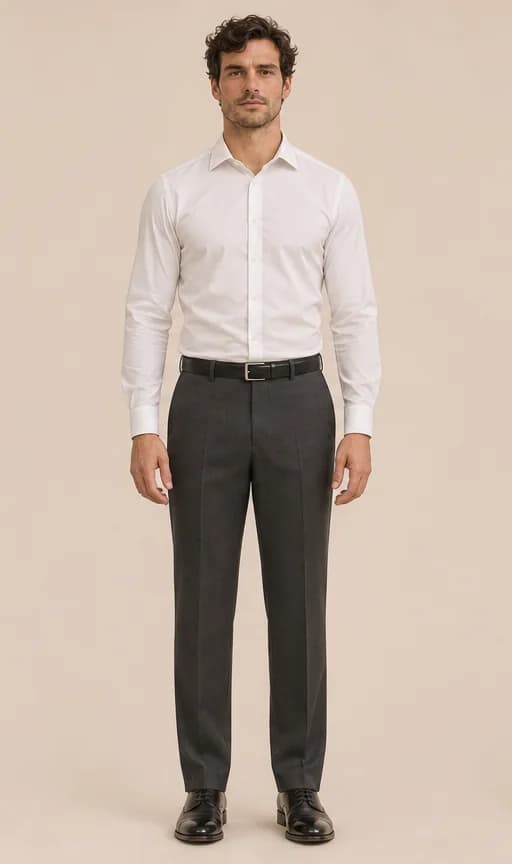
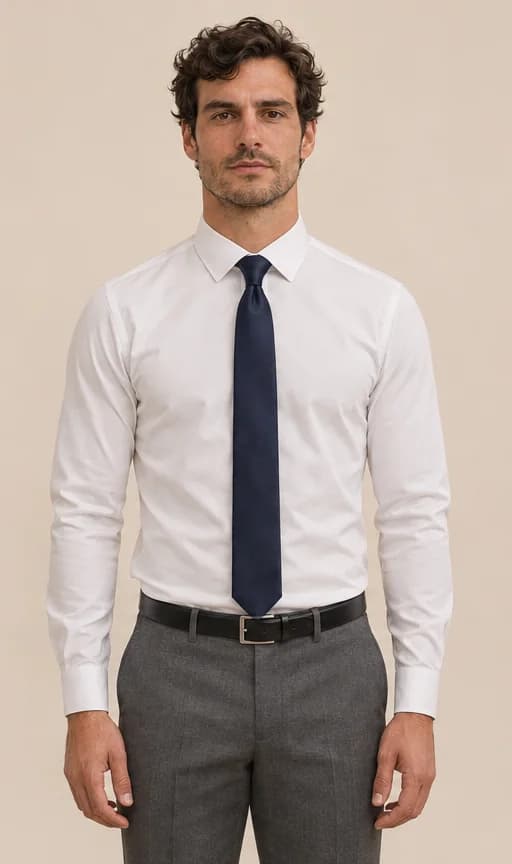
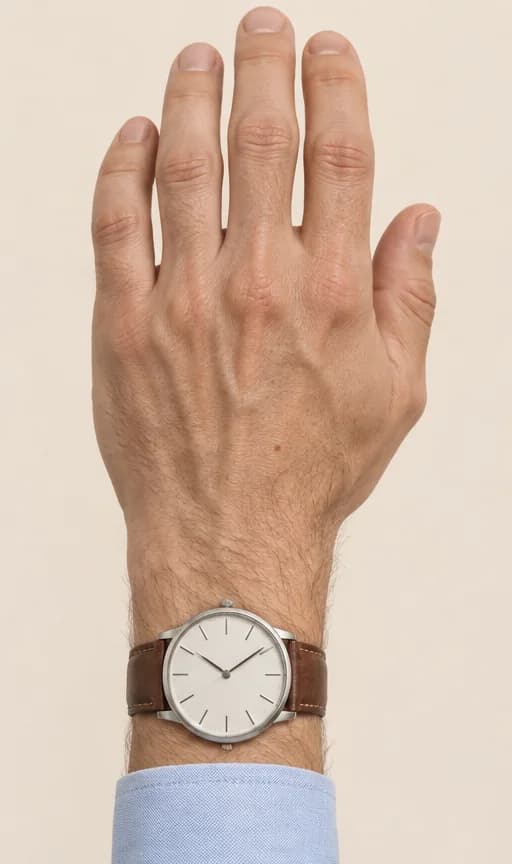
Right size: the shoulder seams sit on the shoulder bones, the front lies flat between the buttons, and the cuffs reach the hinge of the wrist.
The fit in 30 seconds.
Check these in order. The first ones are the hardest to alter.
- 01
Collar
The buttoned collar sits close to your neck without pinching.
Test: Two fingers slide flat inside the fastened collar at the front. One finger is too tight, three is too loose.
- 02
Shoulders
The shoulder seam sits on the edge of your shoulder bone.
Test: The seam lands within about 1 cm (3/8 inch) of the bony point of your shoulder, not on your collarbone and not down your arm.
- 03
Chest
The front lies flat between the buttons when you stand, sit and reach.
Test: Hug yourself: no gaps open between buttons. You can pinch about 2.5 to 5 cm (1 to 2 inches) of fabric at each side of the chest.
- 04
Sleeve length
The cuff ends where your hand meets your wrist.
Test: Arms hanging, the cuff reaches about 1 to 2 cm (1/2 to 3/4 inch) past the wrist bone, and it stays at the wrist when you bend your elbow.
- 05
Cuffs
The buttoned cuff stays at your wrist without sliding over your hand.
Test: One finger fits flat inside the buttoned cuff, or a bit more if you wear a watch on that wrist.
- 06
Waist
The body falls from chest to waist without ballooning over the waistband.
Test: Tucked in, no more than about 5 cm (2 inches) of fabric folds over the waistband at each side.
- 07
Length
A shirt you tuck stays tucked; a shirt you wear out covers the waistband.
Test: Raise both arms overhead: a tucked shirt stays in. Untucked, a straight hem ends around the middle of your fly.
Test it in under a minute
Button the shirt all the way to the collar and button the cuffs. Slide two fingers flat inside the collar at the front. Then look at the shoulder seams in the mirror. They should sit on the edge of your shoulders, not halfway down your arms and not on your collarbones.
Now move. Cross your arms and reach forward as if you are hugging someone. The buttons across your chest should stay flat with no gaps opening between them, and the back should not feel close to splitting. Raise both arms overhead. A shirt long enough to tuck stays tucked, and the cuffs slide back to your wrists when you lower your arms. Sit down. The front should not pull open between the buttons above your belt.
A shirt that passes those three moves will look right when you stand still.
What you cannot change later
The collar, shoulders and chest are set when the shirt is cut. The collar is a separate piece made to one size, and the shoulder yoke and armholes decide where everything else hangs. Moving the top button gains a little room, about half a centimeter (1/4 inch), but a collar you cannot close comfortably needs the next size. Sleeves that are too short and a body too short to stay tucked cannot be fixed either, because there is no spare fabric to let down.
Anything too big at the waist or too long is cheap to fix. A tailor can take in the side seams or add two darts in the back, shorten the sleeves by taking off the cuffs and sewing them back on, and shorten the hem. So buy for the collar, shoulders and chest, then have the body brought in if you want a closer shape.
Shirts sold by collar size and sleeve length, such as 15.5/34 in US sizing or 39 in European collar sizing, are the easiest way to get both right. Shirts sold as S, M and L pick one sleeve length for each size, which suits fewer people.
Slim, classic and relaxed fits
The same collar and sleeve can come in three bodies. Pick the one that matches your build and how you wear the shirt.
A slim fit tapers from chest to waist. Right means the buttons lie flat when you sit and reach, and you can still pinch about 2.5 cm (1 inch) of fabric at each side. Lines pulling from the buttons toward your sides mean it is too slim for you, even if it closes.
A classic fit has a straight body with room for movement and for a stomach. Right means a little spare fabric that tucks in smoothly and folds toward the back and sides. Wrong means fabric puffing out above your belt all the way around.
Relaxed and oversized shirts are casual cuts, often with a dropped shoulder, worn untucked or open over a T-shirt. An oversized shirt is cut with a lower shoulder, a wider body and sleeves to match, so the cuffs still end near your wrist. A regular shirt two sizes up is different: the cuffs cover your hands, the collar stands off your neck and the armholes hang low. Keep relaxed cuts out from under a jacket, where the extra fabric bunches in the sleeves.
When standard sizes don't fit you
Muscular chest or arms: buy for the chest and upper arms, even if the waist is then loose, and have the sides taken in. Bend your arm fully and check that the sleeve does not strain at the biceps.
Larger stomach: skip slim fits, which pull across the buttons. A classic fit with a longer tail stays tucked when you sit. A shirt with a straight hem can be worn untucked if it ends around the middle of your fly.
Thick neck: size by the collar first, then have the body taken in. The collar cannot be altered and the body can.
Short: look for short body lengths, or have the hem taken up. Sleeves are easier, since many shirts come in several sleeve lengths.
Tall or long arms: look for tall body lengths and sleeves of 35 inches (89 cm) and up. Sizing up for length gives you a bigger collar and wider shoulders, not much more sleeve.
Related guides
A dress shirt is usually worn under a blazer or suit jacket and with a tie, so check those next. For a shirt you already own, upload a mirror photo to the fit check, or find out whether a tailor can fix it.
Can a tailor fix it?
Gaps open between the buttons across the chest or bust while you stand still.
The shirt is cut for a smaller chest or bust than yours.
What to do: Size up to fit the chest or bust and have the waist taken in. A hidden snap between two buttons only helps with a slight gap that opens when you move.
The shoulder seams fall partway down your upper arms.
The shirt shoulders are too wide for you.
What to do: Return it and buy a smaller size or a cut with narrower shoulders. Moving the shoulder seam on a shirt is rarely worth it.
The collar is slightly too tight to button comfortably.
The collar is a little small for your neck.
What to do: Have the top button moved toward the edge, which gains about 0.5 cm (1/4 inch). If you need more than that, buy the next collar size.
Fabric balloons over the waistband when the shirt is tucked in.
The body is cut wider than your waist.
What to do: Have the side seams taken in, or two darts added at the back.
The sleeves cover the base of your thumb.
The sleeves are too long for your arms.
What to do: Have the sleeves shortened by removing the cuff, cutting the sleeve and sewing the cuff back on. Sleeves that are too short cannot be lengthened.
Worn untucked, the shirt reaches past your fly or down your hips.
The shirt is cut long so it stays tucked.
What to do: Have the hem shortened, either straight or with a curved shirttail. It will then be too short to tuck.
The shirt pulls out of your waistband when you raise your arms or sit.
The body is too short for your torso.
What to do: Buy a tall length or a cut with a longer tail. There is no fabric to add length.
Prices are typical ranges at an independent tailor in the US and vary by city. Check another garment →
Asked often.
- How tight should a shirt collar be?
- Two fingers should slide flat inside the buttoned collar. If you only button the collar under a tie, still check it, because a tight collar folds and a loose one gapes.
- Why do the buttons gape at my chest or bust when the rest fits?
- The shirt is cut for a smaller chest or bust than yours. Buy the size that fits the chest or bust and have the waist taken in, since a tailor can remove fabric but cannot add it.
- How much shirt cuff should show under a jacket?
- About 0.5 to 1.5 cm (1/4 to 1/2 inch) with your arms at your sides. That only works if the shirt sleeve reaches your wrist hinge and the jacket sleeve stops just above it.
- Will a cotton shirt shrink?
- Cotton that is not pre-shrunk can shrink a little in the first hot washes, mostly in the sleeves and collar. Wash cool, hang to dry, and do not buy a collar that is already snug.
- Should I buy slim fit?
- Only if your chest and shoulders fit it without pull lines from the buttons. A classic fit taken in at the sides gives a closer shape without the strain.