How Shoes Should Fit.
How women's shoes should fit: toe room in flats and heels, width, heel gaps in pumps, when to try them on, and where your trouser hem should fall.
The fit in 30 seconds.
Check these in order. The first ones are the hardest to alter.
- 01
Length
Leave room in front of your longest toe, and measure it where the toe box ends, not at the point of the shoe.
Test: Closed shoes: 1 to 1.5 cm (0.4 to 0.6 in) in front of the longest toe. Pointed toes: the toes reach the point where the shoe starts to narrow, no further.
- 02
Width
The ball of your foot sits in the widest part of the shoe, with no pressure on the bunion joint or the little toe.
Test: Standing, the upper does not bulge over the sole, and nothing presses the joint at the base of the big toe.
- 03
Ball of foot in heels
In heels, your weight lands on the ball of your foot, not on toes jammed into the front.
Test: Standing in the shoe, the ball of your foot sits on the widest, padded part of the insole and your toes do not touch the end.
- 04
Heel
Your heel stays in the shoe when you walk.
Test: Pumps and flats: a gap of no more than about 0.5 cm (0.2 in) opens at the back as you step. Slingbacks: the strap stays on the heel bone.
- 05
Top line and straps
The edge of a pump or flat sits flat on the foot, and straps hold without cutting in.
Test: No gap at the sides when you walk, and no red marks after 10 minutes of walking around the shop.
- 06
Toe box
Your toes lie flat, not curled or stacked.
Test: You can wiggle your toes, and the little toe is not pushed under the fourth.
- 07
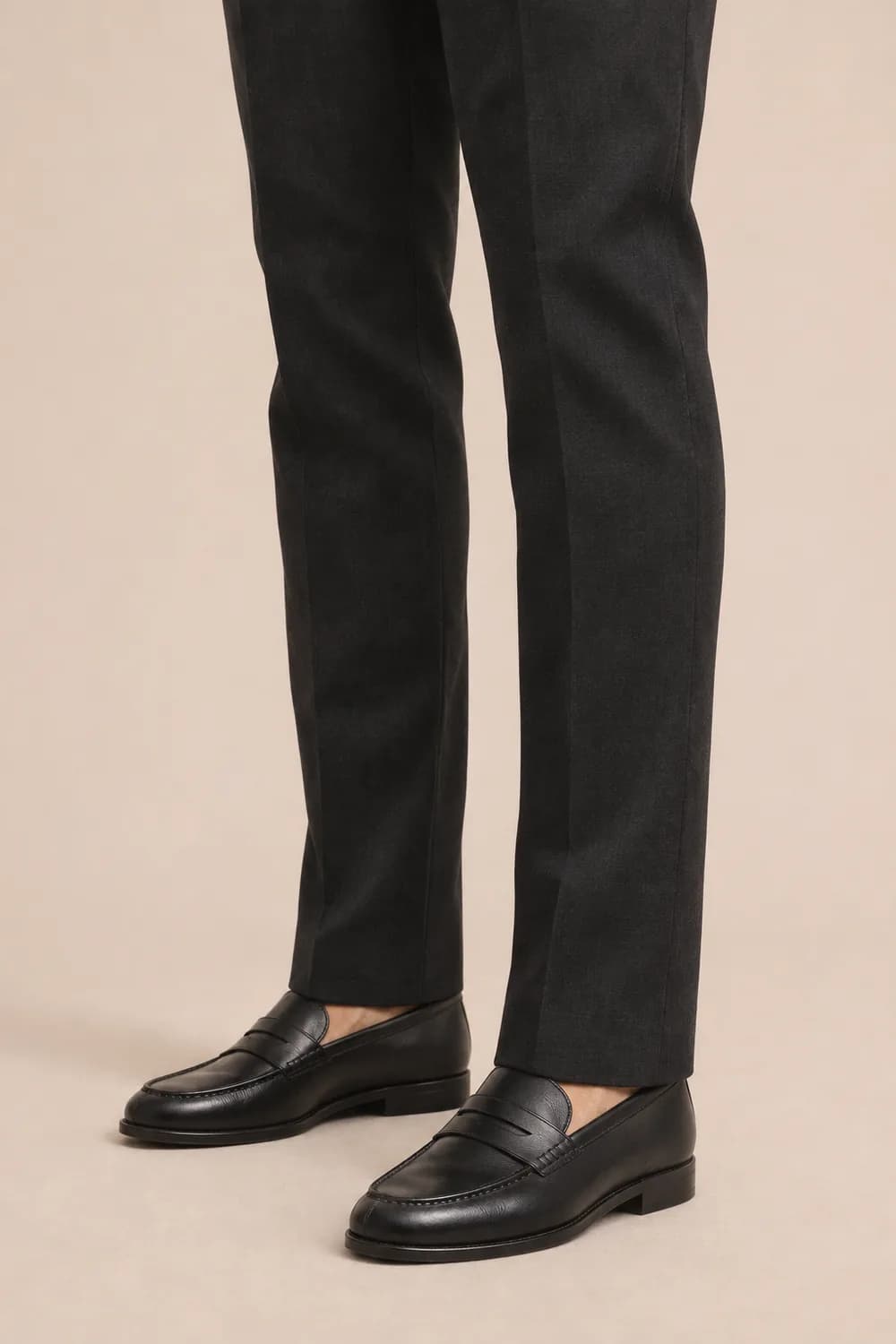
Trouser hem
Hem your trousers for the shoes you will wear with them most.
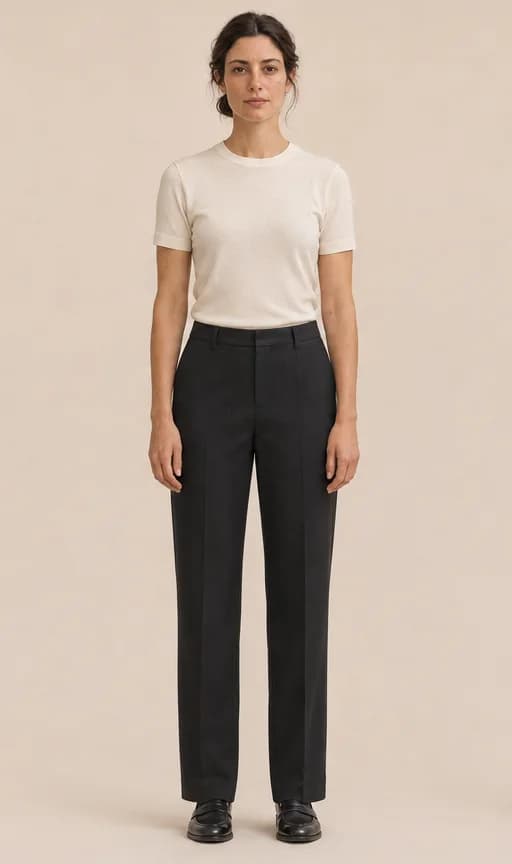
Test: Wide-leg: hem 1 to 2 cm (0.5 in) above the floor with those shoes on. Straight or slim: hem meets the top of the shoe at the front.
A shoe fits when your toes have room in front of them, the ball of your foot sits in the widest part of the shoe, and your heel stays in when you walk. In heels, add one more test: your weight should rest on the ball of your foot, not on toes pressed into the front.
Try them on in the afternoon
Feet swell over the day, and more in heat, after a long walk or a flight. Shop in the afternoon. Bring the socks, tights or bare feet you will wear with the shoes, because tights alone can change how a pump fits.
Most people have one foot a little larger than the other. Try on both shoes and fit the larger foot.
Test them in under a minute
- Stand up. In closed shoes, find your longest toe and check for 1 to 1.5 cm (0.4 to 0.6 in) of space in front of it. In pointed shoes, your toes should end where the shoe starts to narrow.
- Walk across a hard floor. In a pump or ballet flat, watch the back: a gap of more than about 0.5 cm (0.2 in) opening at your heel means the shoe is too long or too wide.
- Check the sides. The top line of a pump should stay against your foot when you walk, not gape open.
- In heels, stand still for 30 seconds. If your toes are already pressing the front, they will be numb in an hour.
- Go up on your toes in flats. The crease should form across the ball of your foot.
Break-in myths
Leather softens and molds a little across the width, a few millimeters at most. It never gets longer. A shoe that pinches your toes in the shop will pinch for as long as you own it.
Synthetic uppers and patent leather barely stretch at all. Buy those only if they feel right on the first wear.
Real break-in means the sole flexes more and stiff leather softens. It does not mean blisters or a rubbed heel for weeks.
Inconsistent sizes and conversions
Women's shoe sizes vary between brands and between styles from the same brand. US, UK and EU conversions are not exact: an EU 38 can be a US 7, 7.5 or 8 depending on the brand. Measure your foot length in centimeters, compare it with each brand's chart, and expect to be a half size different in heels than in sneakers.
Half sizes help. If you fall between, take the larger and add a heel grip or insole.
What a cobbler can fix
Heel grips fix a heel that slips. A half insole or tongue pad holds a foot that slides forward. A cobbler can stretch leather across the width, or spot-stretch the bunion joint or little toe. All of these are quick and cheap.
Length cannot be fixed, and pumps that gape at the sides on a narrow heel often keep gaping after padding.
Shoes and trouser cuts
Hem trousers for the shoes you will wear with them most, and wear those shoes to the tailor.
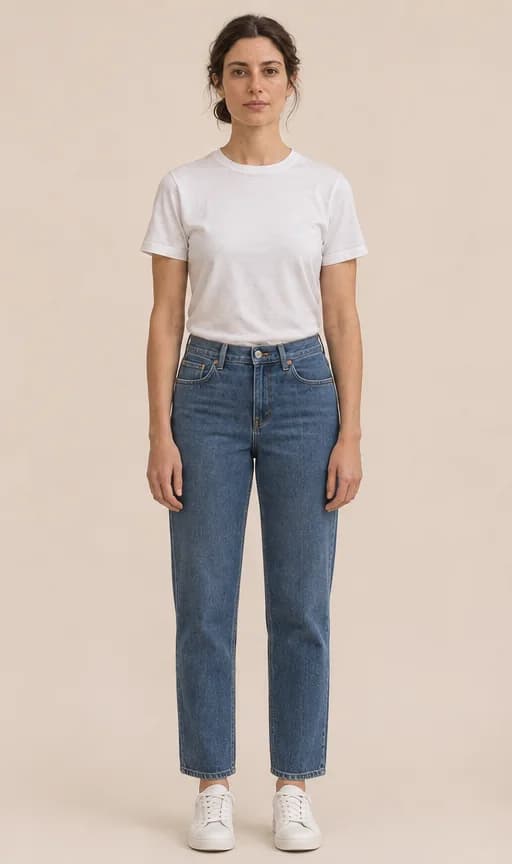
Slim and cropped trousers should end clean above or at the top of the shoe. Ankle length works with flats, loafers and low sneakers.
Straight trousers touch the top of the shoe at the front with no pooling.
Wide-leg trousers should fall to 1 to 2 cm (0.5 in) above the floor with the shoes on. If you switch between flats and heels, you need two pairs or a compromise length that works with a small block heel.
An intentionally chunky shoe, a platform sneaker or a lug-sole loafer, still has toe room and a heel that stays put. A shoe that is simply too big slips at the heel and creases near the toes.
When standard sizes fail you
Wide feet or bunions. Look for brands that offer wide widths (W or C/D in US sizing) and round or almond toes. Sizing up in length to get width leaves your heel slipping.
Narrow feet. Shoes with a strap, a lace or a slingback hold the foot better than an open pump.
High instep. Mary Janes and lace-ups with adjustable straps fit better than loafers or pumps.
Pregnancy and after. Feet often swell and can lengthen. Measure again rather than relying on your old size.
Petite or tall. Your hem length changes with heel height more than shoe size. Petite trousers worn with heels may need no hemming at all.
Related guides
Get the hem right with how dress pants should fit and how jeans should fit, or plan heel height with how a dress should fit.
Can a tailor fix it?
Your heel lifts out of the shoe with every step.
The heel cup is wider than your heel, or the shoe is a touch long.
What to do: Have a cobbler fit heel grips, or stick them in yourself. A thin insole also helps.
Your foot slides forward and your toes hit the front on stairs.
The shoe is about half a size long, or the instep is too roomy.
What to do: Add a tongue pad under the tongue or a half insole to hold the foot back.
Leather shoes pinch across the ball of the foot.
The shoe is slightly narrow for your foot.
What to do: A cobbler can stretch leather across the width by a few millimeters.
One spot presses, often the bunion joint or the little toe.
Your foot has a bump that the last does not allow for.
What to do: Ask a cobbler to spot-stretch that area of the leather.
The sides bulge over the sole, or the shoe is synthetic or patent and tight.
The shoe is a full width too narrow, or made of a material that barely stretches.
What to do: A cobbler can try stretching, but synthetics and patent leather often spring back. Return it if you still can.
Your toes press down from the top of the toe box.
The toe box is too low for your toes.
What to do: Height stretching works only a little on leather. A thinner insole gives a few millimeters.
Your toes touch the end of the shoe when you stand.
The shoe is too short.
What to do: Return it. Stretching adds width, not length.
There is more than a thumb width of empty space past your toes.
The shoe is a full size or more too long.
What to do: Return it. Pads hide half a size at most, and the shoe will crease in the wrong place.
Prices are typical ranges at an independent tailor in the US and vary by city. Check another garment →
Asked often.
- Should new shoes be tight so they can break in?
- Only a little across the width, in leather. Leather softens and molds to your foot, but the length never changes, so a shoe that hurts your toes in the shop will keep hurting.
- What time of day should I try on shoes?
- In the afternoon or evening. Feet swell over the day, so a shoe that fits at 9 a.m. can pinch by evening.
- How much room should be in front of my toes?
- About a thumb width, 1 to 1.5 cm (0.4 to 0.6 in), in front of the longest toe while standing. Running and hiking shoes need the full 1.5 cm because your foot slides forward downhill.
- My feet are different sizes. Which one do I fit?
- Fit the larger foot. Then add an insole or tongue pad to the shoe on the smaller foot.
- Are shoe sizes the same across brands?
- No. Sizes vary between brands and between lasts from the same brand. Measure your foot length in centimeters, check the size chart, and try them on.